Camping is an outdoor recreational activity. The participants (known as campers) leave urban areas, their home region, or civilization and enjoy nature while spending one or several nights outdoors, usually at a campsite. Camping may involve the use of a tent, caravan, motorhome, cabin, a primitive structure, or no shelter at all.
Mobile camping
Backpacking is a mobile variety of tent camping. Backpackers use lightweight equipment that can be carried long distances on foot. They hike across land, cross rivers, and camp at remote locations, and select campsites at will, if resource protection rules allow. Backpacking equipment typically costs more than that for car camping, but still far less than a trailer or motorhome, and backpacking campsites are generally cheap. Backpacking is popular, especially amongst youth who are willing to go through a challenging experience. Although it can be among the cheapest ways to camp, backpacking is also the most uncomfortable and it is usually performed by individuals who are in a generally good condition. The equipment one needs for camping must be carried on the camper's back, making it an athletic activity not suited to everyone; however, technological development and increased interest in camping has led to an improvement in the equipment carried by backpackers. Many camping companies nowadays produce a wide range of equipment that is lightweight or otherwise specialized for backpacking. Modern technology has greatly improved the general comfort and ease of backpacking. Titanium cookware, ultra-light synthetic fabrics, heat-molded hip straps, and down sleeping bags make for a much lighter pack than similar equipment of the past 50 years or more. For many campers, backpacking allows them to experience the true wilderness, but there is the possibility of severe weather and injury in the backcountry. Some backcountry campers pack in comfortable mattresses, compact chairs, and solar-powered satellite phones.
Mobile camping may involve riding animals such as horses and mules. Pack animals increase the limited carrying capacity of riders or may assist hikers by carrying much of the load. Some pack animals, such as dogs and llamas, cannot be ridden but can carry much of the weight of camp supplies. Horse trails and horse camps may be kept separate from "hiking only" areas due to the extra wear that the heavy animals can put on these areas, but a good dog, goat, or llama can easily go just about anywhere that a human can.
Canoe camping
Canoe camping is similar to backpacking, but uses canoes for transportation; much more weight and bulk can be carried in a canoe or kayak than in a backpack. Canoe camping is common in North America. Canoe camping is quite popular as a camping opportunity, although the equipment needed is more expensive than that needed when camping with a car.The advantage of this type of camping is that the canoe provides an easier way to transport everything that is needed when camping; however, paddling can be a challenging experience. Rivers and lakes that are not suitable for canoeing may be dangerous, especially for novices. Electric motors or small gas ones may be attached on some canoes, where allowed, for a faster journey on the water. Waterproof bags and fishing gear are often used due to the constant presence of water.
Sail Camping
Sail camping is a form of camping while sailing or boating. Sailors will visit islands and campgrounds along the shorelines, dock their boats, and set up camp. This form of sail camping makes a variety of land-based activities available to the boaters, as they may want a break from being on the water.
Motorcycle camping
Motorcycle camping is more comparable to bicycle camping than car camping due to the limited storage capacity of the motorbike. Motorcycle camping riders, as well as bicycle touring riders, often use some of the same equipment as backpackers because of the lighter weights and compact dimensions associated with backpacking equipment.

Other vehicles used for camping include motorcycles, boats, canoes, pack animals, and even bush planes; although backpacking on foot is a popular alternative.

Tent camping sites often cost less than campsites with full amenities, and most allow direct access by car. Some "walk-in" sites lie a short walk away from the nearest road, but do not require full backpacking equipment. Those who seek a rugged experience in the outdoors prefer to camp with only tents, or with no shelter at all ("under the stars").
Although many people see in camping a chance to get out of the daily routine and improve their survival skills, others would rather benefit from the many amenities that campsites are nowadays equipped with. If a few decades ago camping meant a great deal of responsibility and knowledge about wild nature, today any individual who wants to spend a weekend away in the woods may also expect a high level of comfort.
The amenities that can be found in a campsite vary greatly, as do the prices campers must pay to use them. Usually, the most visited places tend to be more comfortable, more sought after, and more expensive. The cheapest option when it comes to camping still remains backpacking or tent camping, although it can lack some of the comforts of other options.
Many companies manufacturing camping accessories produce different types of equipment or gear that is intended to make camping a more comfortable activity. The gear used in camping is crucial and it can be a life saver. The right tent or food storage unit can easily save campers from insects or even bear attacks.
Glamping (glamorous camping) is a growing global phenomenon that combines camping with the luxury and amenities of a home or hotel. Also called boutique camping, luxury camping, posh camping or comfy camping, glamping allows travelers to experience nature without the hassle of finding camp space, carrying their tents, and erecting and taking down their own tents. Lodgings at a glamping sites (glampsites) include structures such as yurts, tipis, pods, bell tents, safari tents, tent cabins, and tree houses. Glampsites range in price from as little as $50 per night to thousands of dollars per night, depending on the level of luxury. Sites offer amenities such as fresh bed linens, en suite washrooms, food service, private verandas, and, most importantly, direct access to the great outdoors.

Historical camping is camping using the methods and tools of a specific time in the past. Historical reenactors often camp with gear correct or similar to that available in the period they represent (Wild West, Medieval, Civil War, etc.). Such camping is done for personal enjoyment and for instructional purposes. Camping may be limited to the group, solo or open to the public as at reenactments and rendezvouses. Their equipment is often made by specialized blacksmiths, leatherworkers and tentmakers or may be self-made.
Minimalist campers bring as little as possible while camping. These campers may choose to do so if their trip involves backcountry camping, or other situations where it would be more efficient to bring less gear. Many survivalist campers exercise this style of camping.
Survivalist campers learn the skills needed to survive in any outdoor situation. This activity may require skills in obtaining food from the wild, emergency medical treatments, orienteering, and pioneering.
"Winter camping" refers to the experience of camping outside during the winter – often when there is snow on the ground. Campers and outdoorspeople have adapted their forms of camping and survival to suit extremely cold nights and limited mobility or evacuation. Methods of survival when winter camping includes: building snow shelters such as quinzhees, igloos, or snow caves, dressing in "layers", staying dry, using low-temperature sleeping bags, and fueling the body with appropriate food.
Workcamping allows campers to trade their labor for a free campsite, and sometimes even for utilities and additional pay. Workcamping is usually seasonal, from May to October, although in warm weather countries or states such as Florida and Arizona, they can be year round. Work campers are mainly individuals or couples who come into a recreational facility with their own RV and offer their labor to maintain that particular facility. In exchange, they can camp for free and might sometimes receive wages. Camp host programs allow people to camp for free for extended periods in exchange for volunteering to introduce visitors to campground facilities and organizing some activities.
Urban camping is about spending a night or more camping outdoors in an urban environment.
Camping equipment
Mobile camping
Backpacking is a mobile variety of tent camping. Backpackers use lightweight equipment that can be carried long distances on foot. They hike across land, cross rivers, and camp at remote locations, and select campsites at will, if resource protection rules allow. Backpacking equipment typically costs more than that for car camping, but still far less than a trailer or motorhome, and backpacking campsites are generally cheap. Backpacking is popular, especially amongst youth who are willing to go through a challenging experience. Although it can be among the cheapest ways to camp, backpacking is also the most uncomfortable and it is usually performed by individuals who are in a generally good condition. The equipment one needs for camping must be carried on the camper's back, making it an athletic activity not suited to everyone; however, technological development and increased interest in camping has led to an improvement in the equipment carried by backpackers. Many camping companies nowadays produce a wide range of equipment that is lightweight or otherwise specialized for backpacking. Modern technology has greatly improved the general comfort and ease of backpacking. Titanium cookware, ultra-light synthetic fabrics, heat-molded hip straps, and down sleeping bags make for a much lighter pack than similar equipment of the past 50 years or more. For many campers, backpacking allows them to experience the true wilderness, but there is the possibility of severe weather and injury in the backcountry. Some backcountry campers pack in comfortable mattresses, compact chairs, and solar-powered satellite phones.
Mobile camping may involve riding animals such as horses and mules. Pack animals increase the limited carrying capacity of riders or may assist hikers by carrying much of the load. Some pack animals, such as dogs and llamas, cannot be ridden but can carry much of the weight of camp supplies. Horse trails and horse camps may be kept separate from "hiking only" areas due to the extra wear that the heavy animals can put on these areas, but a good dog, goat, or llama can easily go just about anywhere that a human can.
Canoe camping
Canoe camping is similar to backpacking, but uses canoes for transportation; much more weight and bulk can be carried in a canoe or kayak than in a backpack. Canoe camping is common in North America. Canoe camping is quite popular as a camping opportunity, although the equipment needed is more expensive than that needed when camping with a car.The advantage of this type of camping is that the canoe provides an easier way to transport everything that is needed when camping; however, paddling can be a challenging experience. Rivers and lakes that are not suitable for canoeing may be dangerous, especially for novices. Electric motors or small gas ones may be attached on some canoes, where allowed, for a faster journey on the water. Waterproof bags and fishing gear are often used due to the constant presence of water.
Sail Camping
Sail camping is a form of camping while sailing or boating. Sailors will visit islands and campgrounds along the shorelines, dock their boats, and set up camp. This form of sail camping makes a variety of land-based activities available to the boaters, as they may want a break from being on the water.
Motorcycle camping
Motorcycle camping is more comparable to bicycle camping than car camping due to the limited storage capacity of the motorbike. Motorcycle camping riders, as well as bicycle touring riders, often use some of the same equipment as backpackers because of the lighter weights and compact dimensions associated with backpacking equipment.
Campgrounds and commercial campsites

Campers span a broad range of age, ability, and ruggedness, and
campsites are designed in many ways as well. Many campgrounds have sites
with facilities such as fire rings, barbecue grills,
utilities, shared bathrooms and laundry, as well as access to nearby
recreational facilities, but not all campsites have similar levels of
development. Campsites can range from a patch of dirt, to a level, paved
pad with sewer and electricity. (For more information on facilities, see the campsite and RV park articles.)
Today’s campers have a range of comforts available to them, whether
their shelter is a tent or a recreational vehicle. Those choosing to
camp closer to their car ("car camping") with a tent may have access to
potable hot water, tent interior lighting and fans, and other
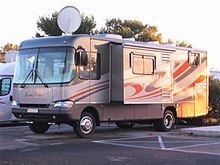
technological changes to camping gear. For those camping in recreational vehicles (RVs), options may include air conditioning, bathrooms, kitchens, showers, and home theater systems. In the United States, Canada and Europe, some campgrounds offer hookups where recreational vehicles are supplied with electricity, water, and sewer services.Other vehicles used for camping include motorcycles, boats, canoes, pack animals, and even bush planes; although backpacking on foot is a popular alternative.
Tent camping sites often cost less than campsites with full amenities, and most allow direct access by car. Some "walk-in" sites lie a short walk away from the nearest road, but do not require full backpacking equipment. Those who seek a rugged experience in the outdoors prefer to camp with only tents, or with no shelter at all ("under the stars").
Although many people see in camping a chance to get out of the daily routine and improve their survival skills, others would rather benefit from the many amenities that campsites are nowadays equipped with. If a few decades ago camping meant a great deal of responsibility and knowledge about wild nature, today any individual who wants to spend a weekend away in the woods may also expect a high level of comfort.
The amenities that can be found in a campsite vary greatly, as do the prices campers must pay to use them. Usually, the most visited places tend to be more comfortable, more sought after, and more expensive. The cheapest option when it comes to camping still remains backpacking or tent camping, although it can lack some of the comforts of other options.
Many companies manufacturing camping accessories produce different types of equipment or gear that is intended to make camping a more comfortable activity. The gear used in camping is crucial and it can be a life saver. The right tent or food storage unit can easily save campers from insects or even bear attacks.
Specialized camping
Adventure camping is a form of camping by people who race (possibly adventure racing or mountain biking) during the day, and camp in a minimalist way at night. They might use the basic items of camping equipment such as a micro-camping stove, sleeping bag, and bivouac bag.
Glamping (glamorous camping) is a growing global phenomenon that combines camping with the luxury and amenities of a home or hotel. Also called boutique camping, luxury camping, posh camping or comfy camping, glamping allows travelers to experience nature without the hassle of finding camp space, carrying their tents, and erecting and taking down their own tents. Lodgings at a glamping sites (glampsites) include structures such as yurts, tipis, pods, bell tents, safari tents, tent cabins, and tree houses. Glampsites range in price from as little as $50 per night to thousands of dollars per night, depending on the level of luxury. Sites offer amenities such as fresh bed linens, en suite washrooms, food service, private verandas, and, most importantly, direct access to the great outdoors.

Historical camping is camping using the methods and tools of a specific time in the past. Historical reenactors often camp with gear correct or similar to that available in the period they represent (Wild West, Medieval, Civil War, etc.). Such camping is done for personal enjoyment and for instructional purposes. Camping may be limited to the group, solo or open to the public as at reenactments and rendezvouses. Their equipment is often made by specialized blacksmiths, leatherworkers and tentmakers or may be self-made.
Minimalist campers bring as little as possible while camping. These campers may choose to do so if their trip involves backcountry camping, or other situations where it would be more efficient to bring less gear. Many survivalist campers exercise this style of camping.
Survivalist campers learn the skills needed to survive in any outdoor situation. This activity may require skills in obtaining food from the wild, emergency medical treatments, orienteering, and pioneering.
"Winter camping" refers to the experience of camping outside during the winter – often when there is snow on the ground. Campers and outdoorspeople have adapted their forms of camping and survival to suit extremely cold nights and limited mobility or evacuation. Methods of survival when winter camping includes: building snow shelters such as quinzhees, igloos, or snow caves, dressing in "layers", staying dry, using low-temperature sleeping bags, and fueling the body with appropriate food.
Workcamping allows campers to trade their labor for a free campsite, and sometimes even for utilities and additional pay. Workcamping is usually seasonal, from May to October, although in warm weather countries or states such as Florida and Arizona, they can be year round. Work campers are mainly individuals or couples who come into a recreational facility with their own RV and offer their labor to maintain that particular facility. In exchange, they can camp for free and might sometimes receive wages. Camp host programs allow people to camp for free for extended periods in exchange for volunteering to introduce visitors to campground facilities and organizing some activities.
Urban camping is about spending a night or more camping outdoors in an urban environment.
Camping equipment

No comments:
Post a Comment